

Fuel cell electric buses (FCEBs) are moving beyond pilots into growing commercial fleets. They deliver operational strengths – rapid refuelling, long range, and consistent performance across hot and cold weather – but historically carry a total cost of ownership (TCO) premium compared to diesel, and in many cases, versus battery electric buses (BEBs). That premium depends mainly on hydrogen price, vehicle acquisition cost, and operational requirements. Less obvious, but decisive, is how fuel cell module design and powertrain architecture can impact those inputs.
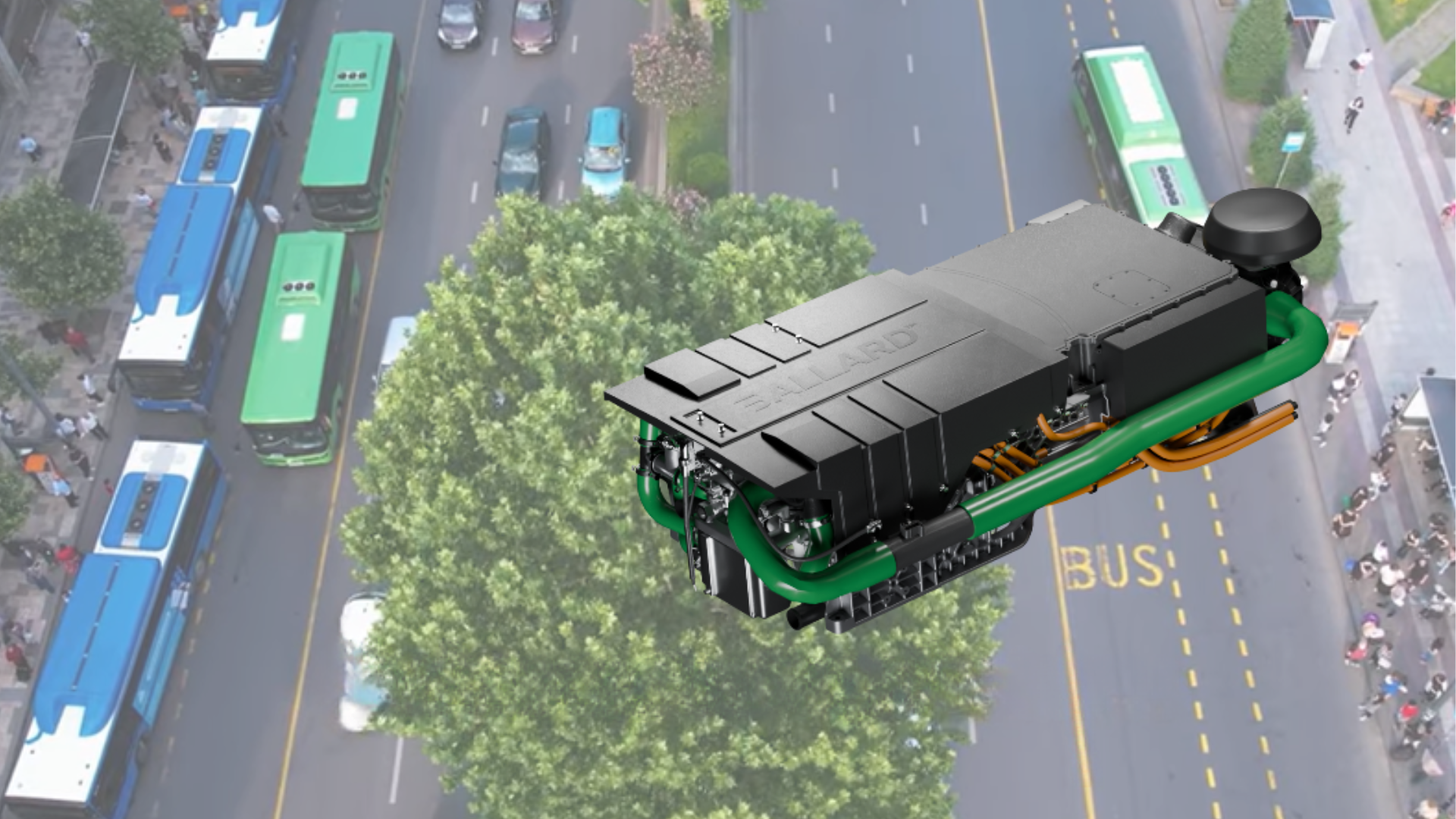
Ballard’s FCmove®â€‘SC – the company’s ninth‑generation fuel cell platform – is designed for transit buses and demonstrates how efficient module design with simpler vehicle integration directly contributes to TCO improvements. The FCmove®â€‘SC module incorporates learnings from Ballard’s market‑leading operational base which includes OEM and operator feedback from over 250 million service kilometers.
The fuel cell engine packages module‑level innovations and pairs them with telemetry‑enabled fleet services. Together, these changes reduce integration cost, lower hydrogen consumption on many duty cycles, and scale down maintenance and downtime impacts ‑ moving many challenging routes into or toward parity territory as hydrogen supply scales and vehicle procurement becomes more standard and repeatable.
Ballard’s new paper outlines how product‑level improvements reduce capital expenditure (CAPEX) and operating expense (OPEX), how hybridization with the battery, controller, and HVAC system impacts hydrogen consumption, and the key powertrain and operational actions bus OEMs and fleet operators can take to capture these savings.
The FCmove®â€‘SC case study shows that targeted module engineering – higher operating temperature, integrated DC/ DC power conversion, reduced parts count, and service‑centred design – produces benefits that can be multiplied: lower component and vehicle integration cost, and materially lower maintenance and downtime when combined with telemetry-enabled predictive services. These effects act on both CAPEX and OPEX and therefore on fleet TCO in ways that component-level improvements alone cannot achieve.
Fuel cell module innovation plus disciplined systems‑level deployment and scaled procurement create a credible pathway to TCO parity for more challenging routes. The FCmove®â€‘SC example illustrates how engineering choices and technical innovation, when paired with appropriate operational practice, can shift FCEBs from a niche alternative to a competitive, scalable solution for many city transit bus networks.